

A supplier you rely on becomes insolvent mid-season, leaving dozens of bookings in disarray. As the travel organiser, it's your responsibility to rebook or refund customers. The cost of doing so lands squarely on you. Supplier failure insurance protects your business so that a supplier's insolvency doesn’t become a cash-flow drain.
In this article, we answer the following questions:

Supplier Failure Insurance (SFI) protects your business when a contracted supplier becomes insolvent. When a supplier can't deliver the services customers have paid for due to insolvency, SFI covers the cost of refunding or rebooking travel services. This ensures the financial burden of a third-party collapse doesn't jeopardise your cash flow.
The phrase ‘contracted supplier’ really matters here. SFI isn't a general safety net against insolvency in any travel sector—it's designed for specific failures within your own supply chain. Under the 2018 Package Travel Regulations, if a supplier fails to deliver their component of a package holiday or linked travel arrangements, the obligation to remedy the problem falls on you, the travel organiser. SFI is the mechanism that makes meeting that obligation financially possible.
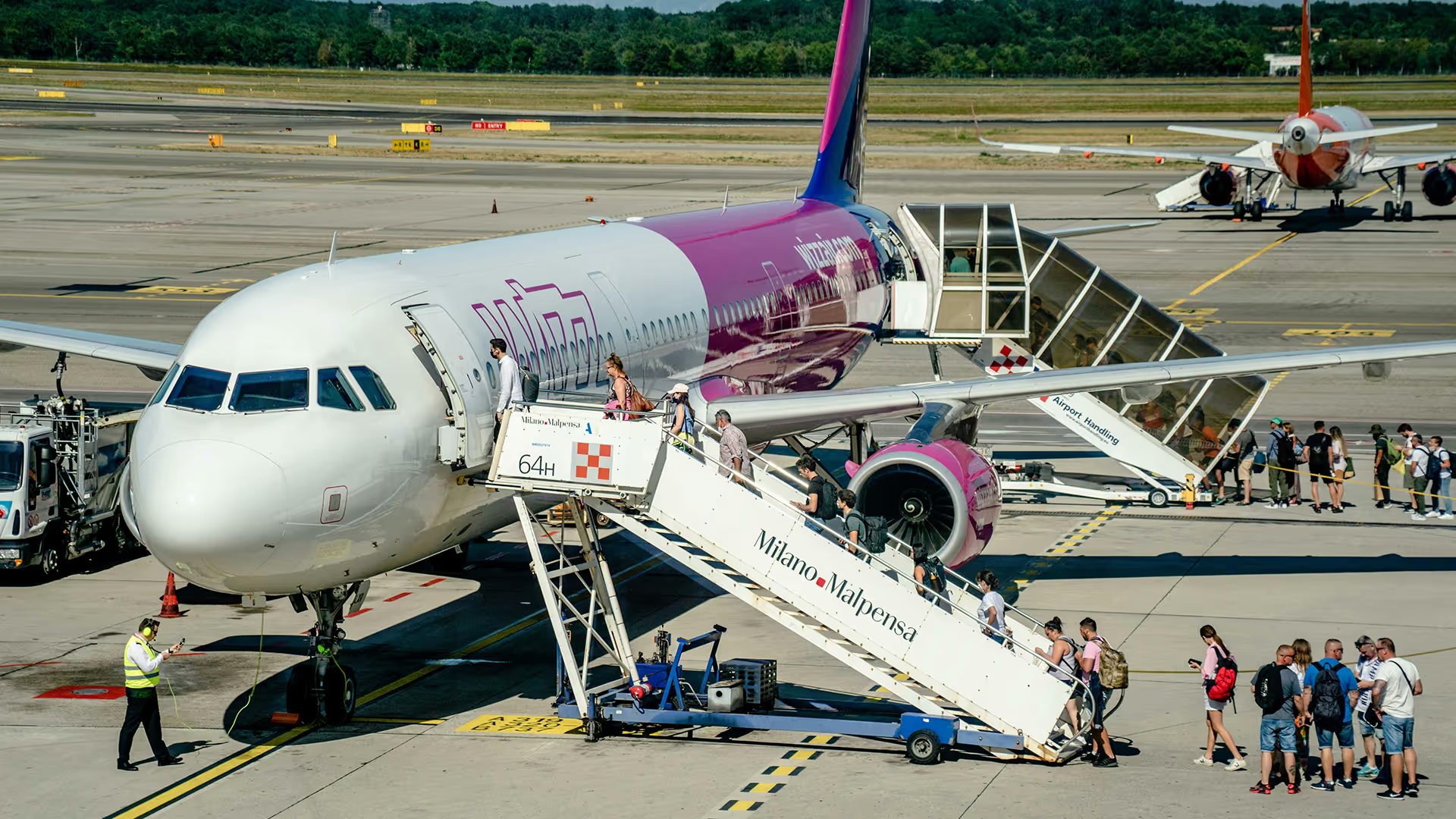
When a contracted supplier becomes insolvent, SFI typically covers the following:
Customers are entitled to a refund if a supplier can't deliver their component of the travel package. SFI reimburses your business for those payments, protecting your cash flow.
Where a replacement supplier is available, SFI covers the cost of making those alternative arrangements, even if the replacement comes at a higher price than the original booking.
If a supplier fails while customers are already abroad and the trip can't continue, the obligation to bring customers home is an immediate, unexpected cost. SFI can cover the expense of doing your duty as the travel organiser.
Please note that the exact scope of cover depends on the specific policy you take out. A specialist SFI provider will structure your policy around your specific supplier relationships, booking volumes and risk exposure—the process is far from generic.

SFI policies typically exclude the following:
The policy applies only to contracted suppliers with a formal agreement in place. Suppliers you have no direct agreement with are outside of the policy's scope.
SFI policies won't accept a claim that is found to involve fraudulent activity or wilful misconduct.
A supplier experiencing a technical failure, strike, or temporary service interruption hasn't become insolvent, meaning SFI doesn’t apply to these scenarios.
Before taking out a policy, it's important to get a clear understanding of the claims process. Here's how it generally works:
Formal insolvency usually means the appointment of an administrator.
As soon as you become aware of a contracted supplier's insolvency, you should contact your insurer. Notifying the insurer in a timely manner matters, as delayed reporting can lead to complications. The sooner you get the insurer involved, the easier it is to gather records of the affected bookings, payments made and other documents.
Additionally, many insurers include a notification condition requiring you to report claims within a specified timeframe. You don't need to have all the information to hand at this stage—what matters most is establishing contact with the insurer as soon as possible.
To assess and process your claim, insurers need evidence. This typically includes the following:
This is why keeping detailed, well-organised records throughout the policy period matters—they can make the difference between getting your claim approved.
Once all the necessary documents have been received, the insurer reviews them against the terms of your policy to determine what is covered and to what extent. How long this stage of the claims process takes depends on the volume of affected bookings and the documentation you provided.
Once the claim is validated, your insurer reimburses the costs you've incurred from the supplier's failure. This includes customer refunds, rebooking expenses and repatriation costs. The reimbursement speed varies between providers. For this reason, it's recommended to discuss payment timelines with providers before you take out a policy.
As a UK travel organiser, it's your responsibility to deliver the holiday, and that includes the obligations of the failed supplier. SFI gives you the financial backing you need to meet those obligations, whether that means rebooking customers with alternative suppliers or issuing refunds.
Any travel business with contracted supplier relationships carries the exposure that SFI is designed to address. This includes:
Whether you specialise in mass-market packages or luxury, tailor-made itineraries, tour operator supplier failure insurance gives your business the stability it needs.
For those acting as the ‘face’ of the booking, supplier failure insurance for travel agents provides the liquidity you need to refund or rebook customers should a supplier become insolvent.
With agents booking through a wide range of third-party suppliers and limited financial reserves, supplier failure insurance for homeworking groups gives them the protection they need when a supplier collapses.
With itineraries that rely on suppliers across multiple countries, supplier failure insurance gives cruise operators the financial backing to quickly identify and fund alternatives should a supplier suddenly become insolvent.
Processing high volumes of transactions between sellers and underlying suppliers, supplier failure insurance protects travel technology platforms from the significant aggregate exposure a single supplier collapse can create.

The travel insurance market has a number of distinct but easily conflated products. For example, supplier failure insurance (SFI) is frequently confused with scheduled airline failure insurance (SAFI), even though the two cover different risks.
The information below acts as a quick reference guide that distinguishes between the three insurance types.
Many travel businesses purchase more than one of these insurance products. SFI and FFI are particularly complementary as they provide cover on both sides of your operations.
Not all SFI policies are built the same. The differences between them may not be obvious at first glance, but they matter most when it comes to making a claim. Here are the areas to look at closely before taking out a policy:
How your insurer defines a supplier's insolvency determines the validity of a claim. Understanding exactly what triggers your cover is vital, as you need to be sure you’re adequately protected.
Travel businesses contract with suppliers worldwide, but not every SFI policy covers failures in every jurisdiction. Confirm whether different legal frameworks for insolvency in other countries could affect the validity of a claim.
Some policies cover a broad range of supplier types, including hotels, cruise operators, transfer companies, car hire and many more, while others may be more restrictive. If your business relies on niche or specialist suppliers, explicitly check that they fall within the policy's scope before taking out cover. It's also important to remember that SFI policies only cover suppliers with whom you have a direct contract.
SFI policies have a maximum claim limit per supplier failure and an aggregate limit for the policy period. Ensuring your limits reflect your actual exposure will shield you from claims problems down the line.
If a major supplier fails and you need to rebook or refund potentially hundreds of customers, you may be funding those costs yourself until the insurer reimburses you. Understanding a provider's typical claims timeline is worth discussing before you take out the cover.
Every policy has exclusions, and it's essential to know exactly what they are. Aside from fraud and wilful misconduct, a common area to check is suppliers you were aware were in financial difficulty before the policy began.
As mentioned earlier, timely notification of a supplier's insolvency is crucial. But you need to dig down into the specifics, including how quickly you need to report, in what format and to whom. These requirements vary between providers.

At TMU Management, we know that generic cover isn't enough. You need insurance that's built specifically for the global travel trade, integrating robust protection across your supplier relationships to keep you compliant, resilient and trusted.
If you're looking for supplier failure insurance that's built around how your business really works, you're in the right place. TMU Management was created to help travel providers like you find insurance solutions that allow you to grow with confidence.
Contact our friendly team today to discuss your supplier failure insurance needs.


If you need insurance that reflects how your business really works, TMU Management is here to help. Our team will assess your challenges, understand your exposures and design a bespoke solution that fits your strategy.
Contact usThank you for your interest in TMU Management. If you have any questions about our company or our services, please feel free to reach out via our contact form, or using the contact details below. We look forward to connecting with you soon!