External risks impact travel businesses more than other sectors. Customers pay months before they travel, meaning trips are sold in one set of conditions and delivered in another. Payments are taken in one currency, while supplier costs are paid in another. On top of that, the Package Travel Regulations (PTRs) place the cost of cancellations, refunds and repatriation on the travel organiser.
In travel and tourism, the perception of risk is nearly as important as the level of real risk. 2026 has shown just how quickly external conditions can change. The conflict in the Middle East, which began in February, is driving up fuel costs and contributing to sinking consumer confidence.
You can't prevent recessions, conflicts and currency movements, but you can manage the financial impact they have on your business. In this, the second article of our travel industry risk management series (part one covers supplier risk), we explore how to manage the risks that come with economic downturns, geopolitical disruption and currency exposure.


A downturn puts pressure on every link in the travel value chain, from the customers deciding when to book to the suppliers delivering the trip and the acquirers dealing with chargebacks:
Research by ABTA found that the conflict in the Middle East was changing when travellers booked trips, with 30% of travellers saying they'll book two to four weeks before they travel. That leaves operators with less visibility of demand and less customer money in hand, while their commitments to hotels and airlines were often made months earlier.
Many travel companies operate on thin margins and rely on advance payments to fund day-to-day operations. In a downturn, falling occupancy and rising costs put that model under strain, and the financially weakest suppliers fail. The financial impact of supplier failure ripples across the travel supply chain, creating economic difficulty for the travel organisers who are liable for carrying out the trip.
Acquirers are ultimately liable for the chargebacks that follow a travel merchant's failure. When insolvency risk rises across the sector, they take steps to protect themselves. For travel businesses without sufficient insolvency protection, that can mean higher rolling reserves, delayed settlements or account reviews that tie up working capital.
No insurance policy covers a fall in demand. However, one of the most significant costs of a downturn comes from the suppliers that fail under the financial pressure. Operators working with smaller suppliers or concentrated supply chains are particularly exposed. This is where risk transfer comes in.
When a supplier or an airline collapses, supplier failure insurance (SFI) and scheduled airline failure insurance (SAFI) cover the refunds, rebooking at current market prices and repatriation costs that would otherwise come out of your working capital. Pipeline funds insurance does the same for money owed to you by intermediaries.
Your own insolvency protection matters, too. Financial failure insurance protects customer money without ringfencing it in a trust account, meaning more of your working capital is available for day-to-day business costs. In the eyes of your acquirer, it shows that customers are protected if something goes wrong, which helps you avoid the sudden reserve increases or account freezes that can impact travel businesses in a downturn.
Find out more: What is financial failure insurance and why do travel businesses need it?
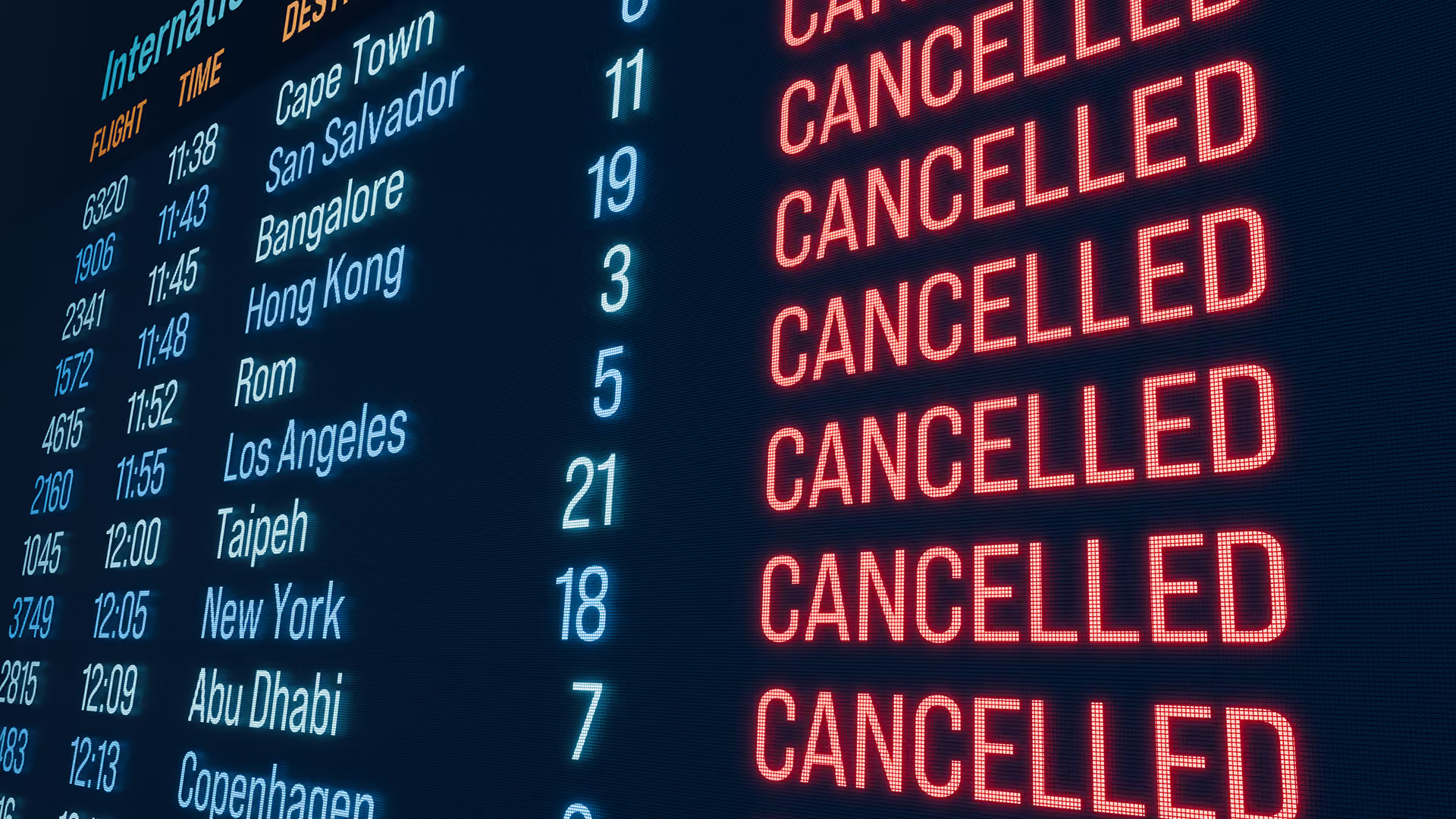
Conflict, terrorism and civil unrest can close destinations and airspace with very little warning. For UK travel businesses, the financial impact makes itself known quickly:
Once the Foreign, Commonwealth & Development Office (FCDO) advises against travel to a destination, customers due to travel while the advice is in place can cancel for a full refund. Those refunds must be paid within 14 days, often long before the money already paid to suppliers can be recovered.
For travellers already abroad, you must provide assistance and, where they can't return as planned, cover their accommodation for up to three nights. These obligations apply whether or not your suppliers refund you, putting your working capital under sudden strain.
Track how much revenue and prepayments to suppliers are tied to each destination you serve. Concentration in any one region, particularly if that region shows signs of instability, creates high risk exposure. Spreading your business across several regions and limiting long-dated prepayments in volatile regions reduces the amount you lose if a region becomes inaccessible for a time.
For every region you serve, have a response plan ready in case geopolitical disruption stops customers from travelling. Keep a close eye on FCDO advice and update customers quickly when disruption occurs, letting them know what alternatives you can offer them. For example, moving customers to unaffected destinations helps you retain some revenue, and prompt refunds (before customers can instigate chargebacks) protect your chargeback ratio.
Conflict and political events are commonly excluded from standard commercial policies. However, where insurance does help is with the supplier failures disruption causes. If a supplier or airline collapses under the strain caused by geopolitical disruption, SFI and SAFI cover the cost of refunding and rebooking customers, and pipeline funds insurance protects your revenue should an intermediary fail before you get the money owed to you.
For example, Travel Counsellors, an international network of independently operated travel advisers, were exposed to airline supplier failures when managing client bookings. To mitigate this risk, the company worked closely with TMU Management to integrate supplier airline failure insurance into their booking system. In the event of an airline insolvency, clients are refunded, rebooked or repatriated without individual advisers taking on the financial burden.
Most UK travel businesses sell in sterling, but pay a large share of their costs in other currencies, sometimes months after the customer has paid for the trip. If sterling weakens in that time, those costs rise, and the difference comes straight out of your margin. That creates several pressures:
The PTRs only allow a surcharge for increased fuel, tax, exchange rates and fees after the booking is made if the contract permits it. If an increase is more than 8%, customers have the right to cancel for a full refund. Because any surcharge risks cancellations and lost customer trust, many travel businesses choose to absorb the cost instead.
Jet fuel is priced in US dollars, so a weaker pound raises costs for airlines, particularly for those that haven't hedged their fuel. In 2026, jet fuel prices approximately doubled after the conflict in the Middle East began, while sterling fell against the dollar. Airlines respond with higher fares and fuel surcharges, and weaker carriers cease operations under the economic pressure.
When currency volatility combines with high fuel costs and fixed pricing, it can squeeze margins across the supply chain. If a supplier or airline collapses as a result, UK travel businesses face the double blow of losing their upfront prepayments and having to rebook customers at current, inflated market rates or refund them.
Many travel businesses manage exchange rate risk through hedging. Forward contracts let you fix the exchange rate for supplier payments you know are coming, so you know what a trip will cost when you price it. Hedging protects you from exchange rate movements, but it can't protect you from their knock-on effects.
That's where insurance comes in. Supplier failure insurance and scheduled airline failure insurance cover the cost of refunding, rebooking or repatriating customers if a supplier or airline becomes insolvent, while pipeline funds insurance protects funds owed to you by intermediaries. Together, these insurance solutions protect your working capital when the pressure causes failures in the travel supply chain.

The risks we've covered rarely arrive one at a time. Conflicts push up fuel costs and a weaker pound increases the cost of trips already sold. These pressures lead to supplier and airline failures, which impact your liquidity just when you need it most.
You can't stop these external events from happening, but you can control how much of their cost lands on your business by working with TMU Management. We start by mapping your exposure across your entire supply and payment chain, then build in protection at each point of exposure. And none of it is off-the-shelf cover – it is customised, strategic and built to perform in real time.
Find out where your travel business is most exposed and how layered cover can protect your margins and cash flow. Get in touch with the TMU Management team today.


If you need insurance that reflects how your business really works, TMU Management is here to help. Our team will assess your challenges, understand your exposures and design a bespoke solution that fits your strategy.
Contact usThank you for your interest in TMU Management. If you have any questions about our company or our services, please feel free to reach out via our contact form, or using the contact details below. We look forward to connecting with you soon!